Introduction
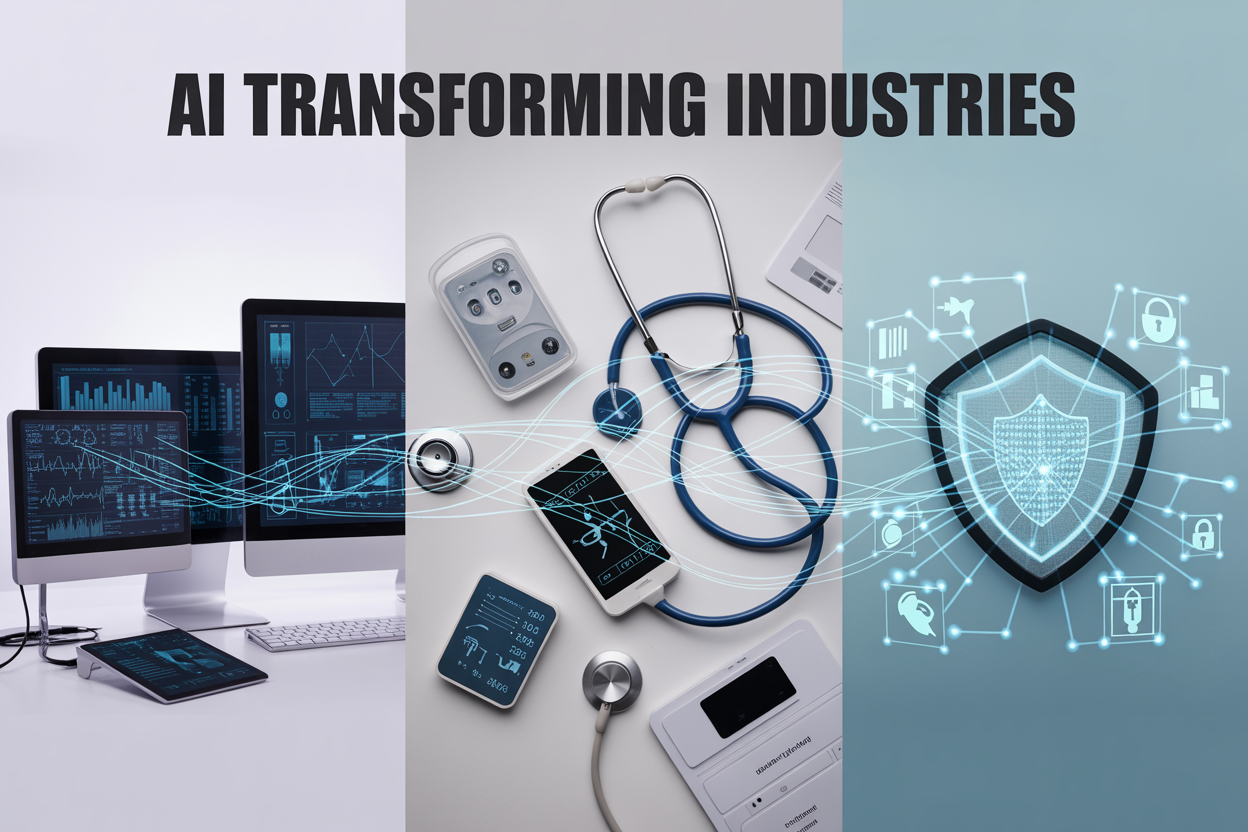
Inside the AI Toolbox: Artificial Intelligence (AI) is no longer a futuristic concept—it’s the invisible engine driving the digital transformation of our everyday lives. Beyond the commonly known AI tools like chatbots and virtual assistants, a myriad of advanced, lesser-known AI applications quietly power critical processes behind the scenes. From enhancing cybersecurity to optimizing manufacturing, improving healthcare, and transforming mobile experiences, these hidden AI solutions are revolutionizing industries in profound ways.
This article delves into the AI toolbox’s concealed treasures—cutting-edge AI technologies and applications that are shaping the modern digital world in 2025. We will explore these lesser-publicized AI domains, their real-world impact, examples of pioneering companies, and answer frequently asked questions. This guide is designed to provide professionals, enthusiasts, and decision-makers with accurate, insightful perspectives about the hidden AI tools that enable smarter, faster, and more secure digital ecosystems.
The Invisible Power: How Hidden AI Applications Drive Digital Transformation
Most users interact daily with popular AI tools like Siri, Alexa, or ChatGPT. However, powerful AI applications underpinning enterprise and infrastructure systems often go unnoticed. These include:
- Predictive maintenance in manufacturing
- AI-driven cybersecurity to detect anomalies in real time
- On-device AI for mobile apps blending responsiveness and privacy
- Personalized AI interfaces that adapt content and services dynamically
- AI for optimizing logistics and supply chain management
These hidden applications leverage advanced AI algorithms such as deep learning, reinforcement learning, natural language understanding, and computer vision to automate complex tasks, predict challenges, and optimize operations, fuelling unprecedented levels of efficiency and innovation.
Read Also: Generative AI for Social Media Creators: The Shortcut to Viral Content
Key Hidden AI Applications Powering the Digital World
1. Predictive Maintenance and Quality Control
Manufacturing and industrial sectors are some of the earliest adopters of AI for predictive maintenance. Sensors embedded across machinery collect continuous streams of data monitored by AI models. These models detect patterns indicating potential equipment failures before they happen, enabling timely maintenance that drastically reduces downtime and costs.
- Example: Siemens uses AI to reduce unplanned downtime by up to 30% through intelligent fault prediction and scheduling.
- Quality Control: AI-powered vision systems inspect products in real-time, identifying microscopic defects invisible to humans, ensuring consistent high-quality production.
2. AI-Powered Cybersecurity
AI algorithms constantly scan networks and user behavior to detect anomalies indicating security threats, fraud, or data breaches. These tools provide real-time alerts and can autonomously remediate risks or block attacks. Advanced models improve detection by learning evolving attack signatures, making cybersecurity dynamic and adaptive.
- Example: Large financial institutions use AI-driven anomaly detection to prevent fraud and secure online transactions.
- Emerging Tools: Platforms integrating behavioral biometrics and AI-driven code scanning help developers secure applications proactively.
3. Advanced On-Device AI
Mobile apps increasingly incorporate AI models running directly on devices—called on-device AI. This approach boosts user experience through lightning-fast responses, offline functionality, enhanced privacy, and reduced latency.
- Examples:
- TensorFlow Lite and Core ML: Popular frameworks enabling deep learning models optimized for smartphones and IoT devices.
- Google Gemini Nano: Supports generative AI functionalities locally without sending sensitive data to the cloud.
- Challenges: Balancing model complexity with hardware constraints and ensuring low energy consumption.
4. AI-Driven Personalization Engines
Brands and platforms use AI to tailor digital experiences dynamically, analyzing user interactions, preferences, and context to serve personalized content, recommendations, and advertisements.
- Outcomes: Improved engagement, conversion rates, and customer loyalty.
- Examples: Netflix’s content recommendation system and Amazon’s personalized shopping experiences rely on robust AI personalization models.
5. Intelligent Supply Chain and Logistics Management
AI optimizes logistics by forecasting demand, managing inventory dynamically, routing deliveries efficiently, and predicting supply chain disruptions using real-time data and predictive analytics.
- Example: Global retailers deploy AI to balance inventory levels, reducing excess stock and preventing shortages, boosting profitability and supply reliability.
Cutting-Edge AI Tools and Platforms Behind the Scenes
While mainstream users see surface AI applications, developers and enterprises rely on these advanced platforms to build, deploy, and maintain complex AI workflows:
- OpenAI’s GPT-4 and Google Gemini: Powers advanced natural language processing and AI-driven automation globally.
- TensorFlow and PyTorch: Leading frameworks for building machine learning models, widely used for research and production.
- UiPath: A leading Robotic Process Automation (RPA) tool integrating AI to automate repetitive enterprise tasks.
- IBM Watson: Provides AI capabilities for analytics, language understanding, and custom AI solution development across industries.
- Dialogflow and LangChain: Tools for building conversational AI and orchestrating complex workflows with language models.
Real-World Success Stories of Hidden AI Applications
- Tesla’s AI-driven autonomous driving: Processes sensor data in real-time, enabling advanced driver assistance and paving the way for fully self-driving vehicles.
- Hilton’s smart energy management system: Uses AI-driven sensors and automation to reduce energy consumption, improving sustainability and cutting costs.
- ExxonMobil’s reservoir optimization: Analyzes geological and production data with AI to enhance oil and gas extraction efficiency and maximize resource recovery.
- Healthcare AI diagnostics: AI-powered imaging interpretation is twice as accurate as human experts in detecting certain conditions, accelerating diagnosis and personalized treatments.
Read Also: Sustainable Creativity: How Generative AI Can Help Reduce Production Waste
Frequently Asked Questions (FAQs)
Q1: What makes these AI applications “hidden”?
They usually operate behind the scenes within business processes, industrial systems, and enterprise software, so end-users don’t directly interact with or see them.
Q2: Are these AI applications expensive to implement?
While some require significant investment, many organizations use scalable cloud-based AI platforms that lower upfront costs and provide flexible pricing.
Q3: How does on-device AI protect privacy?
By processing data locally without sending sensitive information to external servers, on-device AI minimizes privacy risks and complies better with data protection laws.
Q4: Can AI fully replace humans in these applications?
No. AI complements human expertise by automating routine, data-heavy tasks and providing enhanced decision support, enabling humans to focus on creativity and strategic work.
Q5: How do companies keep AI models updated and unbiased?
They continuously retrain AI models on new data and implement fairness checks to minimize biases and maintain accuracy.
Conclusion
Hidden AI applications form the backbone of today’s digital infrastructure, transforming industries and daily experiences in ways often unnoticed by the average user. From manufacturing floors to your smartphone, these advanced AI tools power efficiency, security, personalization, and innovation at scale. Understanding and leveraging these hidden gems can unlock opportunities not just to keep pace with technological shifts, but to lead in the coming AI-driven era.
In 2025 and beyond, the future belongs to those who explore the full AI toolbox—embracing both the visible and the hidden—to create a smarter, faster, and more connected digital world.