
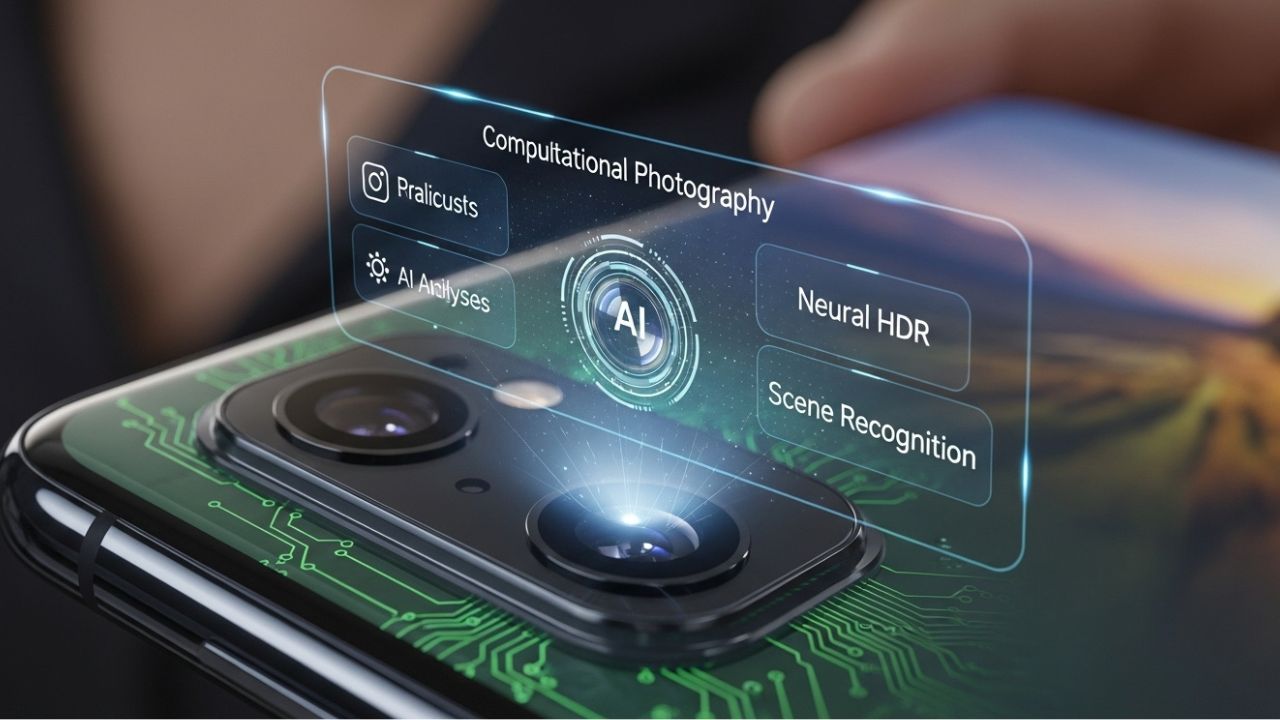
AI Improve Camera Performance: In the fast-evolving world of smartphones, artificial intelligence has transformed mobile cameras from simple point-and-shoot devices into sophisticated tools capable of professional-grade results. AI algorithms process images in real-time, analysing scenes to optimize settings like exposure, color balance, and focus, making photography accessible to everyone without needing expert skills. This integration of AI not only boosts image quality but also enhances user experience by automating complex tasks, ensuring sharper, more vibrant photos even in challenging conditions.
The Basics of AI in Mobile Cameras
AI in mobile cameras works through computational photography, where software algorithms combine data from multiple sensor captures to create a superior final image. Unlike traditional cameras that rely solely on hardware like lenses and sensors, AI uses machine learning models trained on vast datasets of images to predict and enhance outcomes. For instance, when you tap the shutter, the AI instantly evaluates the scene’s lighting, subjects, and composition, adjusting parameters on the fly to reduce noise and improve clarity. This real-time processing happens via powerful chipsets like Google’s Tensor or Qualcomm’s Snapdragon, enabling on-device computations without cloud dependency.
The technology draws from neural networks that mimic human vision, recognizing patterns such as faces or landscapes to apply tailored enhancements. In 2025, advancements in AI have made these features more efficient, with phones capturing dozens of frames per second and merging them seamlessly. This results in photos that look natural yet polished, bridging the gap between amateur snapshots and studio-quality shots.
Enhancing Low-Light and Night Photography
One of the most noticeable AI improvements is in low-light performance, where traditional cameras often produce grainy or blurry images due to limited sensor capabilities. AI-powered night modes, like those in Google Pixel phones, capture multiple exposures at varying shutter speeds and use algorithms to stack them, selecting the clearest pixels while suppressing noise. This process brightens dark areas without overexposing highlights, creating detailed nighttime scenes that rival dedicated cameras.
For example, Samsung’s AI camera systems employ deep learning to analyze ambient light and adjust ISO levels dynamically, reducing blur from hand movement. In tests, these features can improve low-light sharpness by up to 50% compared to non-AI counterparts, allowing users to photograph city streets or indoor events with confidence. Apple’s Night mode on iPhones similarly uses AI to extend exposure times intelligently, preserving colors and textures in shadows. By 2025, this technology has evolved to include predictive AI that anticipates motion, further minimizing shake in handheld shots.
Read Also: What Is the Latest Trend in Artificial Intelligence Right Now? Insights for 2025
Scene Recognition and Automatic Optimization
AI excels at scene detection, identifying elements like food, pets, or sunsets to apply preset optimizations automatically. When the camera detects a landscape, it boosts saturation and contrast for vivid skies, while portrait scenes trigger skin tone smoothing and edge detection for natural bokeh effects. This object recognition relies on trained models that process thousands of image classifications per second, ensuring settings like white balance and sharpness are ideal before capture.
In practice, Huawei’s AI cameras scan for up to 500 scene types, adjusting focus and exposure in milliseconds to highlight subjects. For pet owners, features like “pet mode” use AI to track furry friends in motion, sharpening fur details that might otherwise blur. This not only saves time but also educates users by suggesting modes, turning casual photographers into more skilled ones over time. Recent 2025 models from brands like OnePlus integrate generative AI to even suggest compositions, overlaying subtle guides in the viewfinder.
Advancing Portrait and Selfie Capabilities
Portrait photography has seen dramatic AI enhancements, particularly in creating depth-of-field effects on devices without mechanical apertures. AI uses depth-sensing via multiple lenses or software segmentation to separate subjects from backgrounds, applying artificial blur for a professional look. Facial recognition algorithms detect multiple faces, balancing lighting across skin tones to avoid unnatural highlights or shadows.
Selfie cameras benefit from AI-driven beauty modes that subtly enhance features like eye brightness and smile lines without over-editing. Google’s “Best Take” feature, for group selfies, swaps expressions from multiple shots to ensure everyone looks their best, solving common issues in candid group photos. In 2025, Vivo and Oppo phones incorporate AI for real-time age or gender-neutral enhancements, promoting inclusivity while maintaining authenticity. These tools reduce the need for post-editing apps, streamlining workflows for social media users.
Computational Photography Techniques
At the heart of AI improvements lies computational photography, which treats the camera as a system rather than isolated hardware. Techniques like HDR+ capture bracketed exposures and merge them using AI to expand dynamic range, revealing details in both bright skies and dark foregrounds. Image stacking combats noise by averaging multiple frames, a method AI optimizes to preserve motion without ghosting.
Super-resolution AI upscales images by predicting and filling in pixel details, effectively turning a 12MP sensor into a 48MP equivalent in clarity. For video, AI stabilizes footage by analyzing gyro data and frame-to-frame changes, smoothing out jerks in action shots. Qualcomm’s AI Engine in Snapdragon chips enables these processes at 60fps, ensuring lag-free performance even on mid-range phones. This democratization means budget devices like those from Realme now offer pro-level features once exclusive to flagships.
Post-Capture AI Editing and Magic Tools
AI doesn’t stop at capture; it revolutionizes editing with intuitive, one-tap tools. Features like Google’s Magic Eraser use generative AI to remove photobombers, intelligently filling backgrounds with contextually accurate elements. Photo unblur applies de-noising algorithms to sharpen shaky images, recovering details lost to motion. Audio Magic Eraser for videos isolates voices by suppressing wind or traffic noise through spectral analysis.
Samsung’s Galaxy AI includes object removal and style transfers, where users can apply artistic filters that adapt to the scene’s mood. In 2025, iOS 19’s AI tools predict edits based on user history, auto-suggesting enhancements like sky replacement for gloomy weather shots. These features process edits on-device for privacy, with neural engines handling complex tasks in seconds. For filmmakers, AI-driven color grading ensures consistent tones across clips, elevating smartphone videography.
Real-World Examples from Top Smartphones
Google’s Pixel 9 series exemplifies AI integration, with Night Sight producing astrophotography-level images from handheld devices. The Tensor G4 chip powers Best Take and Add Me features, inserting users into group shots seamlessly. Samsung Galaxy S25’s ProVisual Engine uses AI for 8K video upscaling, enhancing low-res clips to ultra-HD.
Apple’s iPhone 16 Pro introduces Photographic Styles powered by AI, allowing real-time tone adjustments without losing detail. OnePlus 13’s Hasselblad-tuned AI excels in color science, recognizing food scenes to enhance vibrancy naturally. In India, brands like Nothing Phone (2a) offer affordable AI portraits with glyph interface feedback for better framing. These examples show how AI levels the playing field, with mid-tier phones like Moto Edge 50 matching flagships in low-light prowess.
The Broader Impact on Users and Photography
AI improvements empower everyday users by reducing the learning curve, letting novices achieve results that once required DSLRs. Photographers benefit from faster workflows, freeing creativity over technical tweaks. Environmentally, AI optimizes battery use during intensive shoots, extending session times. For content creators in regions like Tamil Nadu, these tools aid in documenting local EV infrastructure or events with high fidelity.
However, ethical considerations arise, as over-reliance on AI might diminish manual skills, though most phones offer pro modes to toggle features. In 2025, with 73% of upgrades driven by AI cameras, this tech is reshaping social media and professional gigs alike.
Read Also: AI Tools for Small Businesses: Save Time, Cut Costs, Grow Fast
Frequently Asked Questions
What is the main role of AI in smartphone cameras?
AI primarily analyzes scenes in real-time to optimize exposure, focus, and color, enhancing overall image quality beyond hardware limits.
Can AI completely replace professional cameras?
While AI makes mobile cameras versatile for daily use, professionals still prefer DSLRs for raw control and larger sensors in specialized scenarios.
How does AI handle privacy in camera features?
Most AI processing occurs on-device using encrypted models, minimizing data transmission, though users should review app permissions.
Are AI camera features available on budget phones?
Yes, 2025 budget models from brands like Redmi and Samsung A-series include basic AI enhancements like scene detection and night mode.
Will AI continue to evolve mobile photography?
Absolutely, future updates promise generative AI for scene creation and AR integrations, further blurring lines between phones and pro gear.
Conclusion
AI has fundamentally elevated mobile camera performance, turning smartphones into pocket-sized studios that deliver stunning results effortlessly. From conquering low-light challenges to enabling creative edits, these advancements make photography inclusive and innovative. As we look to 2026, expect even deeper AI integration, pushing boundaries for users worldwide. Embracing these tools not only captures moments better but inspires new ways to see the world through our lenses.







1 thought on “How Does AI Improve Camera Performance on Mobile Phones?”