

Introduction: Reaching Beyond Reality
In the digital age, imagination and computation are merging in ways that were once unthinkable. Generative artificial intelligence (AI) sits at the intersection of data-driven logic and creative possibility. With more than billions of parameters and access to knowledge across every discipline, today’s generative models do not simply process information—they create, hypothesize, and picture worlds beyond what exists. From conjuring surreal artworks to simulating scientific hypotheses and inventing never-before-seen designs, generative AI is increasingly asked not just “what is?” but “what could be?” This new landscape is altering how industries innovate, how society dreams, and how we think about the very boundaries of possibility.
The Essence of Generative AI: Machine as Muse
Generative AI refers to systems—usually neural networks or transformer models—that create new and original content based on patterns learned from vast datasets. Unlike simple automation, generative AI predicts and invents, extrapolating from its training data to propose ideas, designs, and solutions that often surprise even their creators.
How Impossibilities Become Possible
- Image Generation: AI platforms like Midjourney, DALL-E, and Stable Diffusion can create visualizations of worlds and objects that have never existed, blending artistic styles and sci-fi imaginings.
- Text Generation: Large language models invent poetry, prose, alternate histories, and fictional scenarios that push the limits of narrative and logic.
- Simulation and Design: From molecule modeling to city planning, AI proposes solutions to complex problems that would take humans years of research or resources.
- Music, Video, 3D: Generative systems make surreal soundscapes, short films, or interactive environments from prompts alone, empowering creators to explore the boundary between real and surreal.
Read Also: From Sketch to Masterpiece: How AI Turns Simple Drawings into Stunning Artworks
How Generative AI Works: Exploration Beyond the Known
AI’s creativity depends on three core processes:
- Pattern Learning: Systems are trained on millions or billions of examples—images, texts, formulas—so that they understand what is “normal,” as well as what is possible within those rules.
- Prompting and Extrapolation: By tweaking prompts and rules, users direct models to produce unusual combinations, genre mashups, or speculative scenarios.
- Iteration and Feedback: Outputs are refined algorithmically or by human reviewers, selecting for novelty, beauty, utility, or risk—often looping between AI and human until something extraordinary emerges.
Dreaming in Concrete: Examples Across Disciplines
Art That Never Existed
AI artists and designers now make:
- Hybrid animals: Owls with butterfly wings, horses with crystalline horns.
- Impossible architecture: Buildings shaped like mathematical fractals or floating islands.
- Surreal landscapes: Cities made entirely of bioluminescent plants, alien jungle vistas.
Scientific Imagination
AI tools, including simulation models and “science fiction” prompts, generate:
- Hypothetical chemical compounds: Molecules not yet synthesized on earth, some of which could be candidates for new medicines.
- Alternate universe physics: Simulations where gravity works in reverse, or particles behave by invented laws—helping researchers probe the limits of actual theories.
- Space mission planning: Testing theorized rover behaviors for Mars terrains nobody has yet encountered.
Storytelling and Worldbuilding
Fiction writers prompt models for:
- New mythologies: Pantheons, cultures, or alternate histories.
- Languages and scripts: AI can invent alphabets and voices for speculative civilizations.
- Plots that bend logic: AI can imagine social systems or technologies that challenge human constraints.
Design and Architecture
AI powers:
- Virtual fashion and decor: Clothes sewn from impossible materials, interiors with anti-gravity libraries.
- Product prototyping: Gadgets with functions or aesthetics unbound by today’s manufacturing.
- Automobile design: Futuristic vehicles powered by reimagined energy sources.
The Limits and Paradoxes of Artificial Imagination
Hallucinations vs Innovation
Generative AI is famous for “hallucinations”—outputs that sound plausible but have little basis in reality. Sometimes, what seems impossible is merely an error, not genius.
- Fake references in scientific writing: Models have invented names, papers, and facts that look credible but simply do not exist—a direct result of their reliance on statistical likelihood rather than genuine verification.
- False coherence in physics or mathematics: AI may propose theories or solutions that subtly contradict established concepts, revealing the risk of trusting “black box” outputs without scrutiny.
Rule-Breaking Creativity—Human vs Machine
While AI can combine, remix, and simulate, genuine “outside the box” creativity often remains a human domain. AI is limited by its training data; if it has only learned from traditional bicycles, it will rarely suggest one with hubless wheels unless prompted to break norms.
Innovators still rely on human instinct to spot true breakthroughs among AI-generated suggestions, filtering out the plausible from the profound.
Engineering the Impossible: Real-World Case Studies
Space and Aerospace Design
NASA and private space firms use AI to imagine spacecraft and mission scenarios unconstrained by current technology—testing “dream” concepts for propulsion, habitat, or materials that might appear in sci-fi but inform actual research.
Climate and Environment
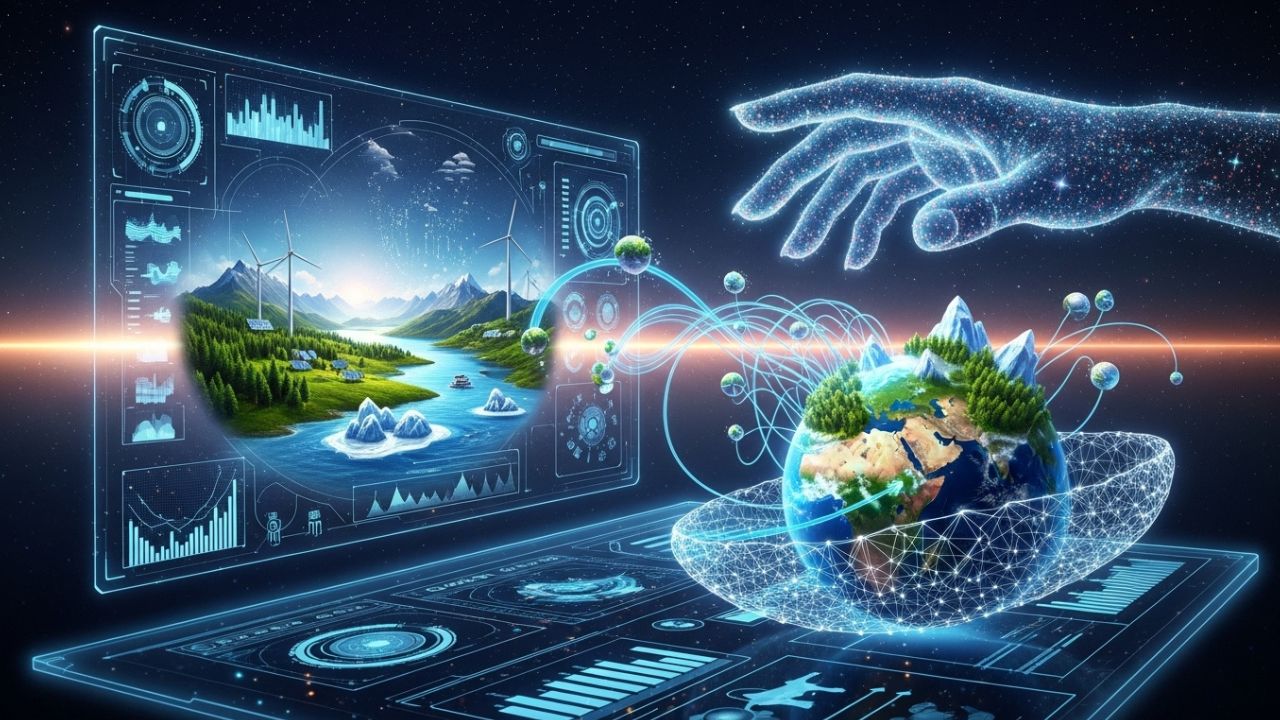
AI simulates future cities:
- Floating civilizations for sea-level rise.
- Architecture adapted for Mars or the Moon.
- Vast forests and biodiversity that could exist if global restoration succeeds.
Games and Immersive Worlds
Major studios use generative models for “impossible” game worlds, levels, and creatures that provide fresh experiences unreachable with human artists alone.
Medicine and Drug Discovery
AI “dreams” up new molecular structures, exploring medical possibilities far beyond current libraries in the hope of hit therapies.
Opportunities and Risks
Empowering Creativity
- Artists and creators no longer need technical finesse or large teams; a single dream can generate portfolios or prototypes in minutes.
- Researchers and engineers can test unlikely ideas quickly, accelerating innovation cycles and hypothesis testing.
Deepfakes and Misinformation
Unfiltered generative power can imagine not only good but harmful or misleading scenarios—fueling the “hallucination” problem and requiring robust review to prevent error, fraud, and abuse.
Ethics and Transparency
With the “black box” complexity of models, the line between the possible, the imagined, and the deceptive can blur. Regulators, educators, and developers must work together to provide explainability, clear provenance, and accountability.
Frequently Asked Questions
Can generative AI create truly new ideas?
AI excels at novel combinations, but true paradigm shifts—rule-breaking creativity—remain anchored to human intellect or carefully prompted scenarios.
Does AI ever “hallucinate” the impossible?
Yes; models can invent details, facts, or images with little basis in reality. These creations are best used as brainstorming tools, not as definitive truth.
Are there limits to what AI can imagine?
AI is bound by its training data and architecture; genuinely alien thought remains rare. Expanding datasets and prompt diversity help, but human curation is always essential.
How can industries safely use imagined AI outputs?
By cross-verifying with experts, setting boundaries for use, and maintaining transparency in provenance and intent.
Will AI replace human imagination?
AI will empower and amplify creative thinkers, not replace them. The best workflows combine artificial and natural minds.
Read Also: Prompt to Profit: How Generative AI Is Creating New Income Streams
Conclusion: Dreaming in Collaboration
Generative AI has shattered the walls between data and imagination, letting innovators from every field conjure visions once reserved for fantasy. From surreal art and futuristic science to mind-bending storytelling and bold prototyping, AI is the muse for a new generation empowered to imagine—and sometimes build—what was impossible only yesterday. Yet, responsible collaboration and critical thinking are essential, ensuring that from data comes not just dreams, but also knowledge, insight, and genuine progress.






1 thought on “From Data to Dreams: How Generative AI Imagines the Impossible”