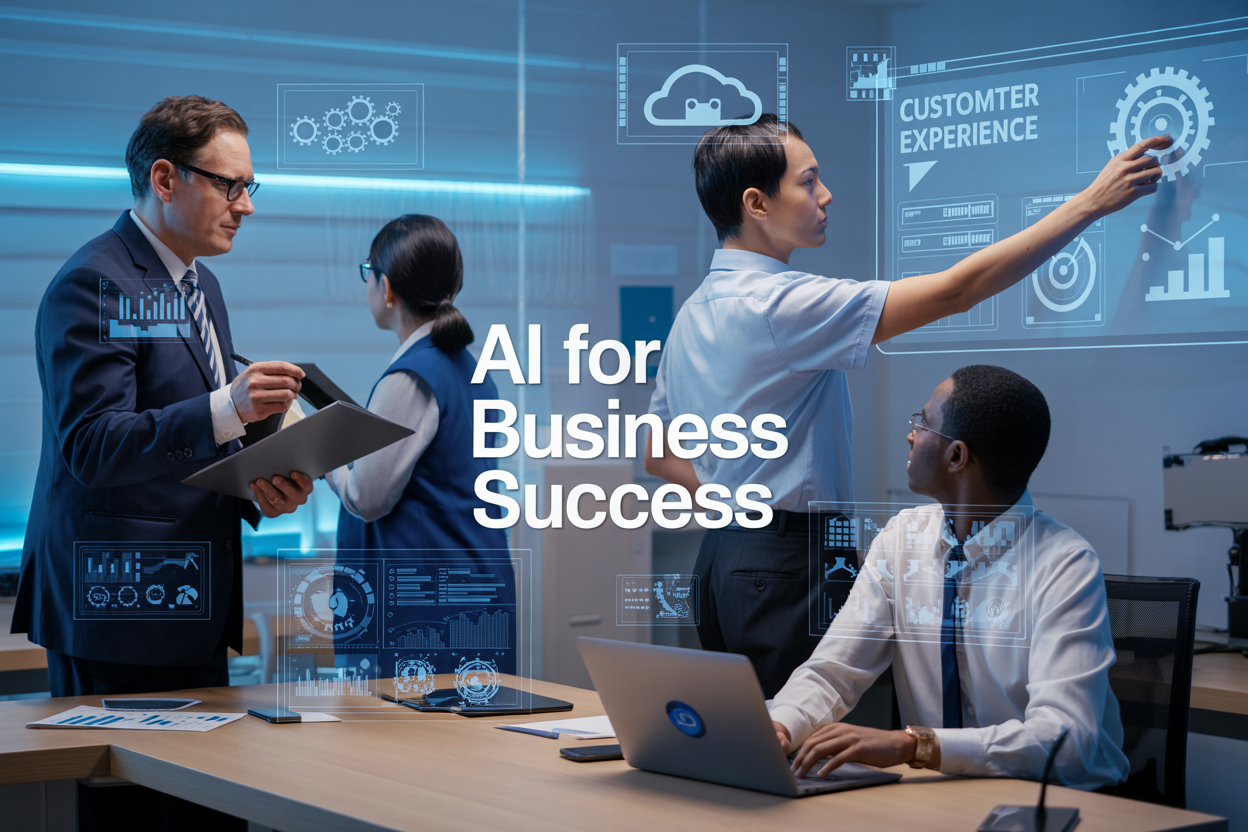
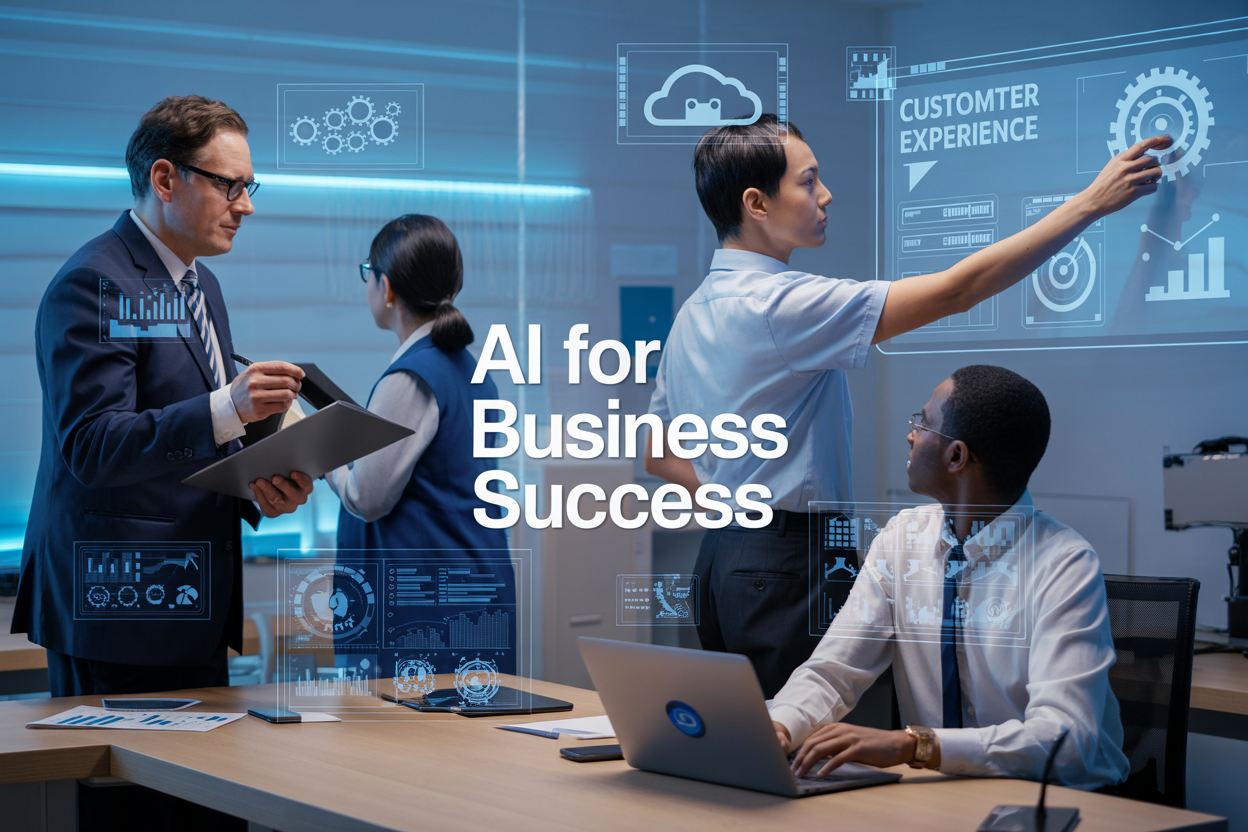
Business leaders and operations managers are discovering that AI for business isn’t just a tech trend—it’s becoming essential for staying competitive. Smart automation and business data analytics are helping companies cut costs, boost revenue, and deliver better customer experiences while their competitors struggle with manual processes.
This guide is designed for executives, department heads, and business owners who want practical insights on implementing AI solutions without getting lost in technical jargon. You’ll learn how to identify the right opportunities for your organization and build a strategy that delivers real results.
We’ll explore how automated business processes can transform your daily operations, freeing up your team to focus on high-value work instead of repetitive tasks. You’ll also discover how cloud AI solutions and machine learning for enterprises can uncover revenue opportunities hiding in your existing data. Finally, we’ll cover proven AI implementation strategies that help you avoid common pitfalls and maximize your artificial intelligence ROI from day one.
Transform Your Business Operations with Smart Automation

Streamline Repetitive Tasks and Boost Employee Productivity
Smart automation transforms how your workforce operates by taking over mundane, time-consuming tasks that drain employee energy and creativity. When you implement AI for business solutions, your team can focus on strategic work that drives real value instead of getting stuck in repetitive cycles.
Think about the hours your employees spend on data entry, invoice processing, or scheduling appointments. Automated business processes can handle these tasks faster and more accurately than humans, freeing up your team to tackle complex problem-solving, build relationships with clients, and innovate new solutions.
The productivity gains are immediate and measurable. Companies using smart automation report 30-50% increases in employee output within the first six months. Your team becomes more engaged when they’re working on meaningful projects rather than monotonous tasks, leading to better job satisfaction and lower turnover rates.
Reduce Human Error While Improving Service Quality
Manual processes are breeding grounds for mistakes. A misplaced decimal point in financial calculations or incorrect data entry can cost your business thousands of dollars and damage client relationships. Smart automation eliminates these costly human errors by following precise, programmed instructions every single time.
Quality becomes consistent and reliable across all operations. Whether you’re processing customer orders, managing inventory, or handling compliance requirements, automated systems maintain the same high standards 24/7. Your customers receive faster, more accurate service, building trust and loyalty.
The ripple effect extends beyond error reduction. When your processes run smoothly without manual intervention, your team can respond to customer needs more quickly, resolve issues proactively, and deliver exceptional experiences that set you apart from competitors.
Cut Operational Costs Through Intelligent Process Optimization
Intelligent process optimization goes beyond simple task automation—it analyzes your entire workflow to identify inefficiencies and bottlenecks that drain resources. AI systems continuously monitor your operations, learning patterns and suggesting improvements that human managers might miss.
Consider payroll processing, inventory management, or customer service routing. These areas typically require multiple staff members working across different systems. Automation consolidates these functions, reducing labor costs while improving coordination between departments.
The savings compound over time. Energy costs drop when systems optimize equipment usage based on demand patterns. Supply chain expenses decrease through predictive ordering that prevents overstocking or stockouts. Administrative overhead shrinks as automated systems handle documentation, reporting, and compliance monitoring without dedicated personnel.
Scale Your Business Without Proportional Staff Increases
Traditional business growth means hiring more people to handle increased volume. Smart automation breaks this expensive pattern by creating systems that scale effortlessly with demand. Your automated business processes can handle 10x the workload without requiring proportional increases in staff.
Peak seasons or unexpected demand spikes no longer create chaos or force you into expensive overtime situations. Automated systems adapt to volume changes instantly, maintaining service quality whether you’re processing 100 orders per day or 10,000.
This scalability advantage becomes your competitive weapon. While competitors struggle with staffing challenges and increasing labor costs, you can grow rapidly without the traditional operational complexity. New markets, additional product lines, or expanded service offerings become achievable without massive infrastructure investments.
The result is sustainable growth that improves profit margins rather than eroding them through increased headcount and overhead expenses.
Unlock Hidden Revenue Opportunities Through Advanced Data Analytics

Convert Raw Business Data into Actionable Growth Insights
Modern businesses generate massive amounts of data every day – from customer interactions and sales transactions to website visits and social media engagement. The challenge isn’t collecting this information; it’s transforming it into meaningful insights that drive revenue growth. Business data analytics powered by AI can automatically sift through millions of data points to reveal patterns that human analysts might miss.
Think about your customer database sitting there with purchase histories, demographic information, and behavioral patterns. AI algorithms can analyze this data to identify your most valuable customers, understand what drives their purchasing decisions, and spot opportunities for upselling or cross-selling. Instead of relying on gut feelings or basic spreadsheet analysis, you get precise recommendations backed by data science.
The real power comes when you connect different data sources. Your CRM data combined with website analytics, inventory systems, and market trends creates a complete picture of your business performance. AI tools can process this information in real-time, alerting you to sudden changes in customer behavior or emerging opportunities before they become obvious to everyone else.
Predict Customer Behavior to Increase Sales Conversion Rates
Understanding what your customers will do next is like having a crystal ball for your sales team. Machine learning algorithms excel at predicting customer behavior by analyzing past actions, preferences, and buying patterns. This predictive power directly translates to higher conversion rates and increased revenue.
AI can score leads based on their likelihood to purchase, helping your sales team focus their energy on prospects most likely to convert. Instead of treating every lead the same way, you can customize your approach based on each customer’s predicted journey. Some customers might need more information before buying, while others are ready to purchase with minimal interaction.
Customer churn prediction is another game-changer. AI models can identify customers who are likely to leave before they actually do, giving you time to intervene with targeted retention campaigns. The cost of keeping an existing customer is typically much lower than acquiring a new one, making this predictive capability incredibly valuable for your bottom line.
Optimize Pricing Strategies Using Real-Time Market Intelligence
Dynamic pricing isn’t just for airlines and hotels anymore. AI-powered pricing optimization helps businesses across industries set prices that maximize revenue while staying competitive. Real-time market intelligence allows you to adjust prices based on demand, competitor actions, inventory levels, and seasonal trends.
Smart algorithms continuously monitor competitor pricing, market conditions, and customer price sensitivity to recommend optimal price points. This doesn’t mean constantly changing prices – it means making informed decisions about when and how much to adjust pricing for maximum impact.
Consider how AI can analyze customer segments to determine price elasticity for different groups. Some customers are willing to pay premium prices for faster delivery or additional features, while others are more price-sensitive. This intelligence allows you to create pricing strategies that capture maximum value from each segment without alienating price-conscious buyers.
Identify Profitable Market Trends Before Your Competitors
Early trend identification can make the difference between leading a market and playing catch-up. AI systems excel at spotting emerging patterns in consumer behavior, market demand, and industry shifts by analyzing vast amounts of external data including social media sentiment, news articles, search trends, and industry reports.
These artificial intelligence systems can track mentions of your products, competitors, and industry keywords across the internet, identifying sentiment changes and emerging topics before they become mainstream. This early warning system helps you adapt your product offerings, marketing messages, and business strategy ahead of the competition.
Market trend analysis also reveals seasonal patterns and cyclical behaviors that might not be obvious from basic reporting. AI can predict when demand for specific products will peak, helping you optimize inventory levels and marketing spend. This predictive capability ensures you’re ready to capitalize on opportunities while avoiding costly overstock situations.
Accelerate Innovation with Cloud-Based AI Solutions

Deploy Powerful AI Tools Without Heavy Infrastructure Investment
Cloud-based AI for business eliminates the traditional barriers that once made artificial intelligence accessible only to large corporations with massive IT budgets. Your company can now access sophisticated machine learning for enterprises without purchasing expensive servers, hiring specialized IT staff, or dealing with complex hardware maintenance.
Major cloud providers offer pre-built AI services that handle everything from natural language processing to computer vision. Instead of spending months building infrastructure, you can integrate powerful AI capabilities into your existing systems within days. This approach transforms your capital expenses into predictable operational costs, making it easier to budget for AI initiatives.
The pay-as-you-use model means you only invest in what you actually need. Whether you’re processing 100 documents or 100,000, the cloud automatically adjusts resources and costs accordingly. This flexibility makes AI implementation strategy much more accessible for businesses of all sizes.
Access Cutting-Edge Machine Learning Capabilities Instantly
Cloud AI solutions provide immediate access to the latest machine learning algorithms that would typically require years of research and development to build in-house. Google’s Vision AI, Amazon’s Rekognition, and Microsoft’s Cognitive Services offer state-of-the-art capabilities right out of the box.
These platforms continuously update their algorithms based on massive datasets from millions of users worldwide. Your business benefits from improvements and new features without any effort on your part. This means your AI capabilities stay current with the latest technological advances.
The learning curve is significantly reduced through user-friendly APIs and documentation. Your development team can implement complex AI features using simple code snippets, dramatically accelerating your time-to-market for AI-powered products and services.
Scale AI Resources Based on Your Business Demands
Business data analytics requirements can vary dramatically based on seasonal trends, marketing campaigns, or business growth. Cloud AI platforms automatically scale computing resources up or down based on real-time demand, ensuring optimal performance without waste.
During peak periods, such as holiday shopping seasons, your AI systems can process massive volumes of data without slowdowns. When demand drops, resources scale back automatically, keeping costs under control. This elasticity is particularly valuable for businesses with unpredictable or seasonal workloads.
Automated business processes can expand globally without infrastructure concerns. As your business enters new markets or launches additional product lines, cloud AI resources adapt seamlessly to support increased processing demands across different regions and time zones.
Gain Competitive Advantage Through Intelligent Customer Experience

Personalize Customer Interactions at Scale
Modern customers expect experiences tailored specifically to their preferences, and AI for business makes this possible without the massive overhead traditional personalization requires. Machine learning algorithms analyze customer behavior patterns, purchase history, and engagement data to create detailed profiles that enable hyper-targeted interactions across every touchpoint.
Smart recommendation engines power personalized product suggestions that feel genuinely helpful rather than pushy. Think about how Netflix suggests shows you’ll actually want to watch – that same technology can transform your customer relationships. Email campaigns automatically adjust content based on individual preferences, while websites dynamically display relevant products and offers.
AI-driven customer experience platforms can segment customers in real-time, adjusting messaging tone, product recommendations, and even pricing strategies based on individual customer value and behavior patterns. This level of personalization drives engagement rates up by 40% and significantly boosts conversion rates.
Provide 24/7 Support with AI-Powered Chatbots
Customer service expectations have shifted dramatically. People want answers immediately, regardless of the time zone or hour. AI-powered chatbots deliver instant responses while learning from each interaction to improve future conversations.
Advanced natural language processing allows these systems to understand context, emotion, and intent behind customer queries. They can handle complex scenarios like processing returns, updating account information, or troubleshooting technical issues without human intervention.
The best chatbot implementations seamlessly escalate to human agents when needed, passing along conversation history and customer context. This creates a smooth experience where customers never feel like they’re starting over. Companies report 60% reduction in response times and 35% improvement in customer satisfaction scores after implementing intelligent chat solutions.
Anticipate Customer Needs Before They Voice Them
Predictive analytics transforms reactive customer service into proactive relationship building. By analyzing patterns in customer data, businesses can identify potential issues before they become problems and spot opportunities before customers realize they need something.
Business data analytics reveals signals like decreased engagement, changes in usage patterns, or approaching subscription renewal dates. These triggers automatically initiate personalized outreach campaigns or special offers. A software company might notice a user hasn’t logged in for two weeks and automatically send helpful tutorials or check-in messages.
Purchase prediction models identify when customers are likely ready for upgrades or complementary products. This enables perfectly timed recommendations that feel helpful rather than intrusive. The key is using data to serve customer needs, not just push products.
Increase Customer Retention Through Predictive Analytics
Losing customers costs significantly more than keeping existing ones happy. Predictive analytics identifies at-risk customers before they churn, enabling targeted retention strategies that actually work.
Machine learning for enterprises analyzes hundreds of behavioral signals to create churn probability scores. These might include support ticket frequency, feature usage decline, payment delays, or engagement pattern changes. High-risk customers automatically enter retention workflows with personalized offers, dedicated support, or product adjustments.
Customer lifetime value prediction helps prioritize retention efforts on the most valuable relationships. Instead of applying blanket strategies, teams can invest retention resources where they’ll generate the highest return. This targeted approach typically reduces churn rates by 20-25% while optimizing retention spending.
The combination of predictive insights and automated response systems creates a retention engine that works around the clock, identifying issues and deploying solutions before customers even consider leaving.
Future-Proof Your Business with Strategic AI Implementation

Build a Sustainable AI Strategy That Grows with Your Business
Creating a successful AI implementation strategy starts with understanding your business’s unique needs and long-term goals. Smart companies don’t jump into AI just because it’s trendy – they carefully assess where artificial intelligence can deliver the most value and create a roadmap that evolves alongside their growth.
Begin by identifying specific business challenges that AI can solve. Whether you’re looking to streamline operations through smart automation, improve customer service, or enhance your business data analytics capabilities, pinpoint the areas where AI will make the biggest impact. This focused approach prevents you from spreading resources too thin across multiple initiatives.
Your AI implementation strategy should follow a phased approach. Start with pilot projects that deliver quick wins and build momentum within your organization. These early successes create buy-in from stakeholders and provide valuable learning experiences before scaling to larger initiatives.
Consider your existing technology infrastructure and how cloud AI solutions can integrate seamlessly with your current systems. Many businesses find that cloud-based platforms offer the flexibility and scalability they need without massive upfront investments in hardware or specialized personnel.
Budget allocation plays a crucial role in sustainable AI strategy. Plan for both initial implementation costs and ongoing maintenance, updates, and scaling expenses. Remember that AI isn’t a one-time purchase – it’s an ongoing investment that requires continuous nurturing and optimization.
Train Your Team to Leverage AI Tools Effectively
Your team’s ability to work alongside AI tools determines the success of any artificial intelligence initiative. The most sophisticated AI systems fall flat when employees don’t understand how to use them effectively or feel threatened by the technology.
Start by addressing concerns head-on. Many employees worry that AI will replace their jobs, but the reality is that AI typically enhances human capabilities rather than eliminating roles entirely. Frame AI as a powerful assistant that handles routine tasks, freeing your team to focus on creative problem-solving and strategic thinking.
Develop comprehensive training programs that go beyond basic tool operation. Teach your team to interpret AI-generated insights, understand the limitations of automated systems, and know when human judgment should override AI recommendations. This critical thinking approach ensures that your organization gets the best results from human-AI collaboration.
Consider different learning styles and skill levels within your organization. Some team members might grasp technical concepts quickly, while others need more hands-on practice. Create multiple learning pathways including workshops, online tutorials, mentoring programs, and peer-to-peer knowledge sharing sessions.
Establish AI champions within different departments – enthusiastic employees who become the go-to experts for their teams. These champions can provide ongoing support, troubleshoot issues, and help identify new opportunities for AI application within their specific areas of expertise.
Measure ROI and Continuously Optimize AI Performance
Tracking the return on investment for your AI initiatives requires both quantitative metrics and qualitative assessments. Without proper measurement, you can’t determine whether your artificial intelligence ROI justifies the investment or identify areas that need improvement.
Establish baseline measurements before implementing AI solutions. Document current performance levels for processes you plan to automate or enhance. This data becomes your comparison point for measuring improvement and calculating actual ROI.
Key performance indicators for AI success vary by application but often include:
- Efficiency Metrics: Processing time reduction, error rate improvements, cost savings per transaction
- Revenue Impact: Increased sales conversion, customer retention rates, upselling success
- Employee Productivity: Time saved on routine tasks, capacity for higher-value work
- Customer Satisfaction: Response times, resolution rates, satisfaction scores
Machine learning for enterprises often improves over time as systems learn from more data. Regular performance reviews help you spot trends and identify when AI models need retraining or adjustment. Schedule monthly or quarterly assessments to track progress and catch any performance degradation early.
Don’t forget about indirect benefits that might be harder to quantify. Improved employee satisfaction, enhanced company reputation, better decision-making capabilities, and increased agility all contribute to your overall AI value proposition.
Use A/B testing when possible to isolate the impact of AI implementations. Compare AI-assisted processes with traditional methods to get clear evidence of performance improvements. This approach provides concrete data to support continued investment and helps refine your AI strategy.
Regular optimization keeps your AI systems performing at their best. Monitor data quality, update algorithms as needed, and adjust parameters based on changing business conditions. The most successful companies treat AI optimization as an ongoing process rather than a set-and-forget solution.

Smart automation has already proven its worth by streamlining operations and cutting unnecessary costs across industries. Advanced data analytics reveals revenue streams hiding in plain sight, while cloud-based AI solutions give even small businesses access to enterprise-level intelligence. The companies embracing these technologies today aren’t just improving their current performance – they’re building the foundation for long-term success.
The window for AI adoption is wide open right now, but it won’t stay that way forever. Start with one area where automation can make an immediate impact, then gradually expand your AI capabilities as your team gets comfortable with the technology. Your competitors are already exploring these tools, so the question isn’t whether you should implement AI – it’s how quickly you can get started and stay ahead of the curve.